
IT Asset Inventory
- Single database for IT assets and equipment
- Automatic inventory HW and SW
- Linking devices to users
Spis treści
All IT assets in one console
Computers, servers, software, and other IT equipment form an extensive infrastructure, whose effective management requires organized and up-to-date information. eAuditor consolidates asset data in a single administrative console, providing quick access to details about devices and their utilization within the organization.
Each inventoried asset can be identified based on its technical parameters, serial number, location, and user association. Automatic data acquisition reduces the need for manual record updates and facilitates the identification of changes in the infrastructure.
Centralized access to information streamlines the daily work of the IT department — from searching for specific devices and verifying their configurations, to preparing reports for individual organizational units. The collected data also helps plan purchases, modernizations, and the reuse of existing equipment.
Key Capabilities:
- Identification of computers and servers,
- Configuration data, serial numbers, and operating systems,
- Information about users, locations, and organizational structure,
- Importing computers, e.g., from Active Directory,
- Reports and export of inventory statements.
Central Infrastructure Register
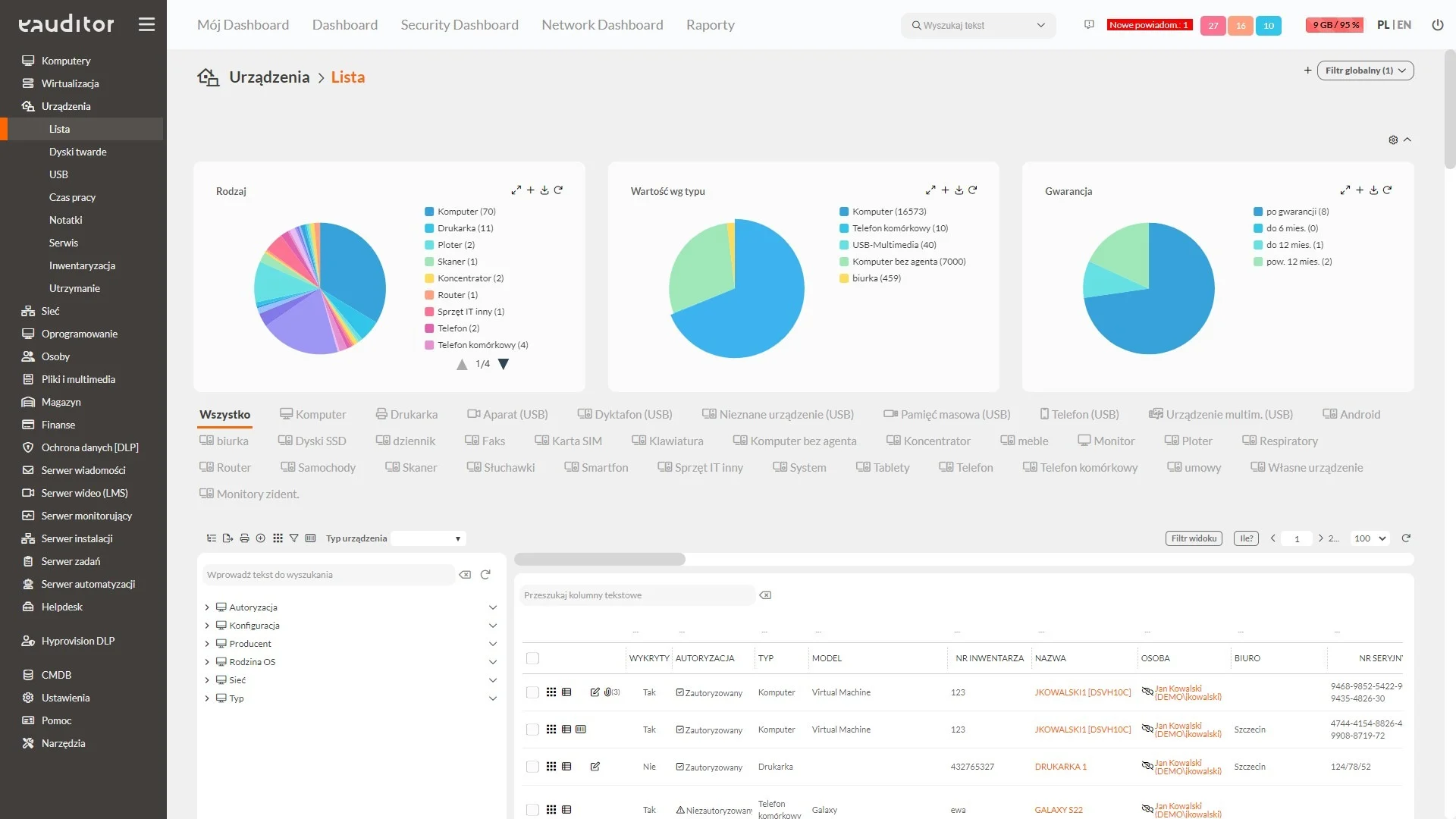
Quick access to detailed device information significantly streamlines IT infrastructure management. In eAuditor, each inventoried computer has a card containing identification and technical data, such as device name, manufacturer, model, serial number, operating system, and information about the current or last user.
Administrators can view parameters of individual devices, search for specific assets, and verify their assignment to users and locations. This allows for quickly determining what equipment is in the organization and where it is being used, without the need for manual device checks.
The central register also facilitates cooperation between the IT department and those responsible for equipment inventory. It provides a common source of information used during technical support requests, equipment transfers to employees, and the preparation of inventory statements.
Automatic Data Completion
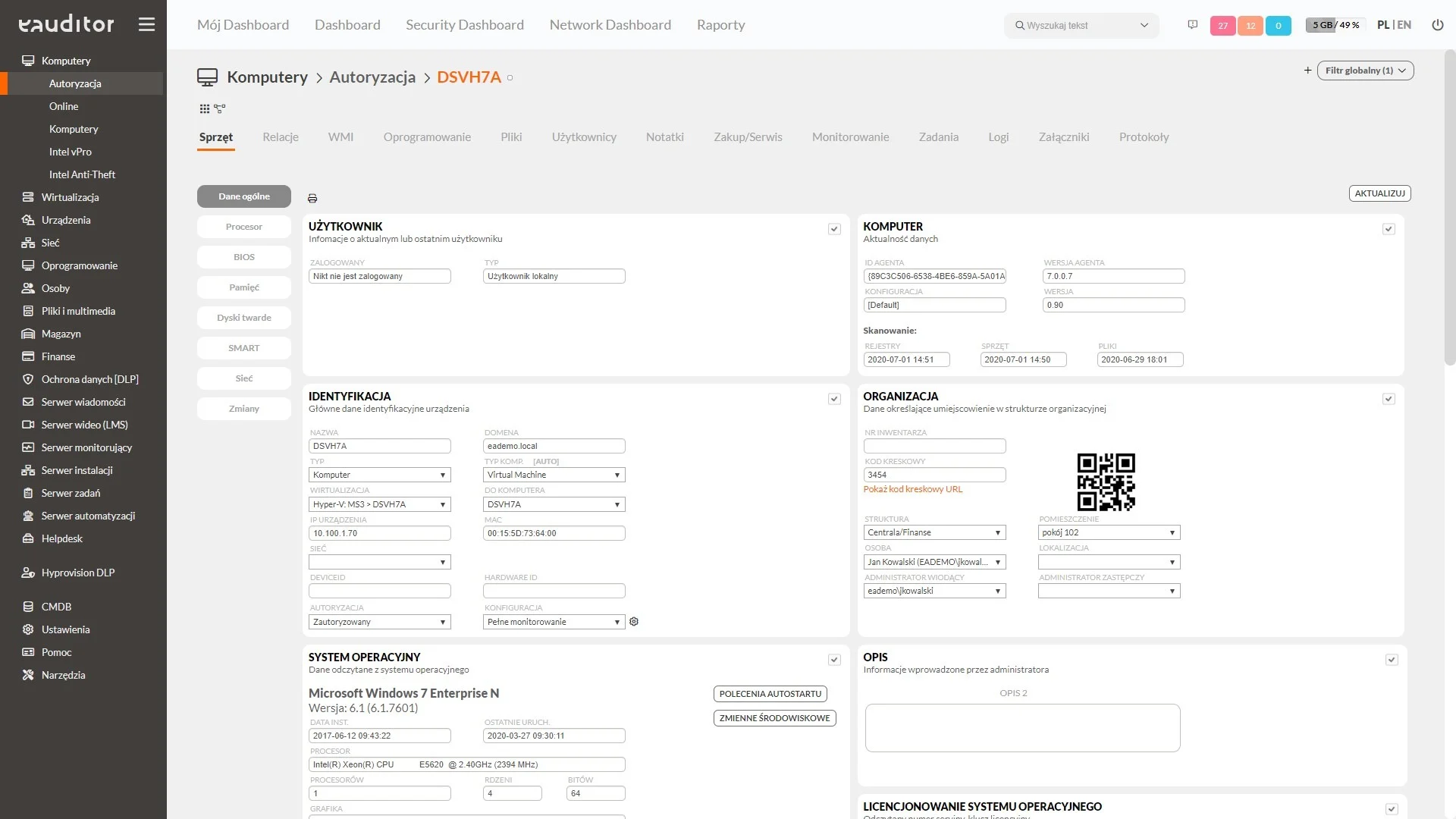
Up-to-date information on hardware and software is crucial for proper IT infrastructure management, especially in organizations with many devices and remote users. eAuditor automatically acquires data on computer and server configurations, detecting hardware parameters, operating systems, and installed applications.
Information collected during inventory is made available in the administrative console, reducing the need for manual device checks and updating their record cards. Administrators can distinguish between data automatically read from the IT environment and manually entered information, maintaining greater control over the register’s content.
The ability to verify the timeliness of data from eAgents and network scanning also allows for identifying devices for which inventory information needs refreshing. This is particularly important for laptops and computers used outside the corporate network, which do not always maintain constant communication with the organization’s infrastructure.
Assignments and Reporting
Clear linking of devices to users and organizational structure facilitates controlling the deployment and utilization of IT equipment. eAuditor allows assigning assets to specific employees, departments, locations, and rooms, providing access to information on where a given device is located and who uses it.
Based on the collected data, administrators can prepare detailed reports and inventory statements for selected organizational units, locations, or device groups. This enables analyzing equipment distribution, verifying assignments, and identifying assets requiring reallocation.
An important element of equipment management is also documenting its transfer between employees. eAuditor supports the creation of equipment transfer and return protocols, enabling the organization of documentation and updating information on device assignments. This allows the organization to more efficiently handle job changes, employee transfers, and accountability for entrusted equipment.