
IT Resource Costs
- Cost of purchasing and maintaining hardware
- Cost reports
- Data for IT budget planning
Spis treści
Cost data linked to infrastructure
Effective IT budget management requires knowledge not only of device purchase costs, but also of the expenses related to their ongoing use. eAuditor allows you to analyze cost information in connection with records of hardware, software, and other IT assets, providing a broader picture of infrastructure maintenance spending.
Administrators can use data on devices, their configuration, and their assignment to users and organizational units. Combined with financial information and reports on hardware maintenance costs, this makes it possible to identify resources generating expenses and pinpoint areas requiring further analysis.
This combination of data supports the preparation of modernization plans, the evaluation of future purchases, and better use of existing equipment. It also makes it easier to justify investment needs based on the actual state of the infrastructure, rather than estimated budget assumptions alone.
Key Capabilities:
- Recording cost information linked to IT assets,
- Analyzing expenses related to hardware purchase and maintenance,
- Access to reports on device maintenance costs,
- Using data on the configuration, number, and location of assets,
- Taking software and license information into account when planning expenses,
- Supporting the planning of modernization, purchases, and infrastructure replacement.
Costs assigned to an asset
IT infrastructure expenses are easier to analyze when they can be linked to the devices they concern. A purchase list alone does not show which equipment remains in use, where it is deployed, or what technical specifications it offers.
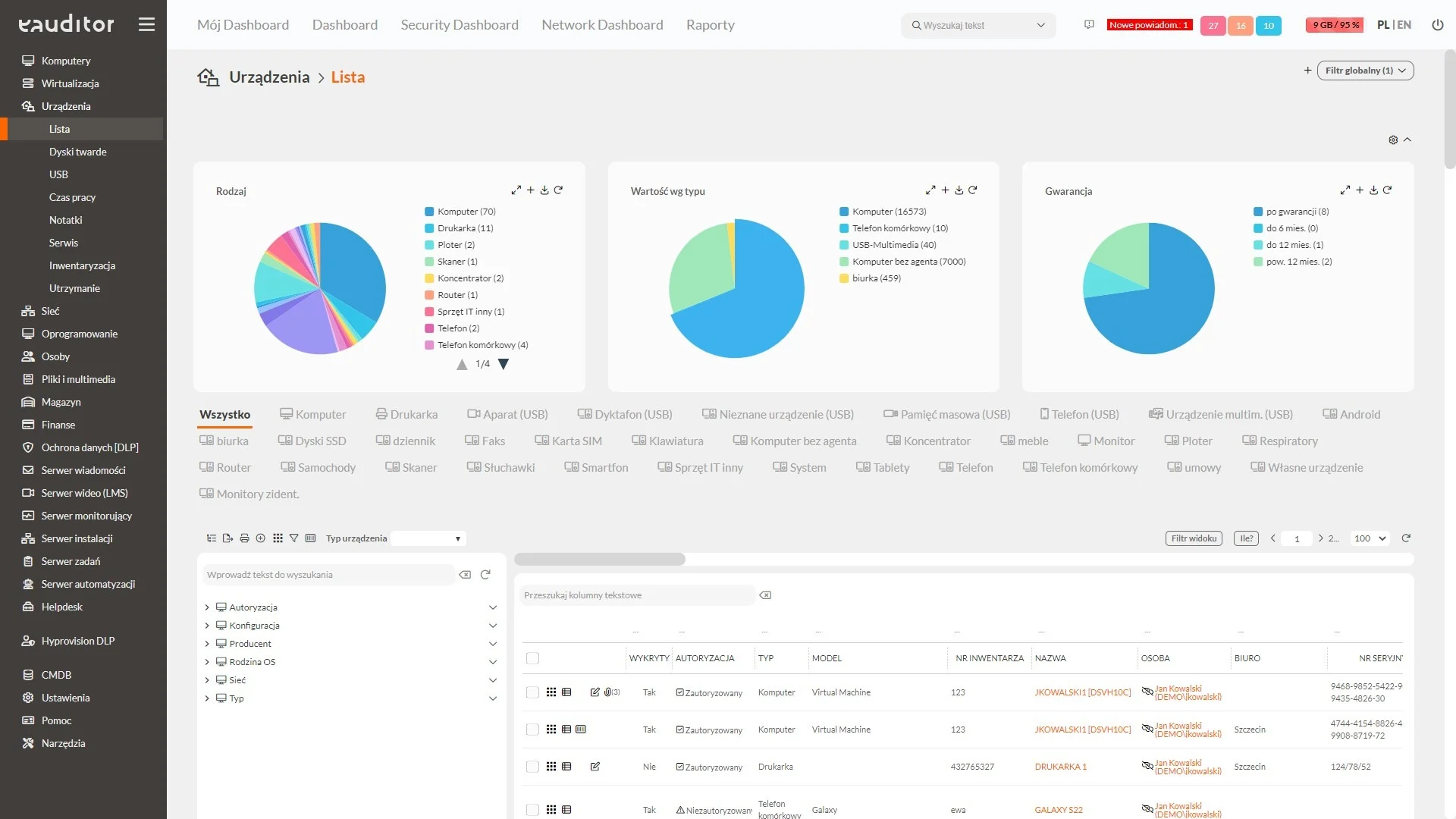
eAuditor allows you to combine cost information with inventory data on computers, servers, and other devices. This enables administrators to analyze expenses in the context of specific assets and compare them with information on their configuration and purpose.
Access to reports on hardware maintenance costs is also important. They allow you to prepare summaries useful for evaluating infrastructure maintenance expenses and identifying items that require detailed verification.
Combining technical and cost data makes it easier for the IT department to collaborate with those responsible for purchase planning and budget control. Asset information then serves as a reference point for the organization’s financial analysis.
Analysis of infrastructure maintenance expenses
The purchase cost of a device is not the only expense associated with its use. In subsequent years of operation, needs may arise for repairs, upgrades, component replacement, or additional service support.
Access to information on computer and server configurations, along with data on their maintenance costs, helps identify which infrastructure elements require special attention. Administrators can compare expense data with device parameters and use this information to prepare recommendations for further use.
For example, an older computer requiring repeated upgrades may be included in an analysis of whether purchasing a new workstation is justified. Similarly, for servers, technical and cost data can support the evaluation of needs related to expansion or equipment replacement.
Such analyses help reduce random purchasing decisions and plan expenses based on the actual needs of the IT environment.
Budget planning and optimizing resource use
Preparing an IT budget requires determining which devices should be replaced, what software will be needed, and where existing resources can be used. Inventory data collected in eAuditor forms the basis for developing such plans.
Information on the number of computers, their configuration, and their assignment to users makes it possible to identify equipment that can be reused or transferred to another department. Instead of automatically planning the purchase of a new device, an administrator can first verify available equipment and assess its suitability for specific tasks.
Data on installed software and owned licenses plays a similar role. Analyzing it helps identify potential surpluses, verify the need for additional licenses, and prepare more rational purchasing plans.
Using information from eAuditor supports setting investment priorities and preparing justifications for planned expenses. The final assessment of cost-effectiveness remains with the organization, but access to organized technical and cost data makes such decisions easier to make.
Cost reporting for control and planning purposes
With a larger number of devices, analyzing individual inventory records is not enough to get a complete picture of IT infrastructure expenses. Summaries are also needed to view costs in a broader context.
Reports available in eAuditor, including hardware maintenance cost summaries, can be used during periodic infrastructure reviews and when preparing data for the finance department and management. They make it easier to identify areas requiring further analysis and to document the rationale for planned modernizations.
Combining cost data with information on the number, configuration, and location of devices also helps justify proposed investments. Rather than presenting only a list of planned purchases, the IT department can indicate which assets need to be replaced and what technical needs are behind the proposed expenses.
As a result, reporting supports not only ongoing cost control but also long-term planning for IT infrastructure development.